Many hands make light work: My Journey with Precog
The Lucky Beginnings
My journey with machine learning has been incredibly weird. Funnily enough, I was preparing for NEET (the infamous medical entrance examination) since class 10. IIIT itself was a stroke of luck, as the results for the DASA round came before NEET. I was glad to take the first escape I could, because I never really wanted to be a medical doctor (subtle foreshadowing: Precog sparked the interest in me to maybe become a different kind of a doctor, the PhD one).
Okay, so now I am starting a computer science degree, but I have no clue about computer science. My first instinct is to go to YouTube, and see what is hot in CS right now. Apparently it is machine learning. I play around with CNNs, and oh, this is fun. Over the next two years of college, something dawns upon me — I am very interested in this field, much more than other aspects of computer science.
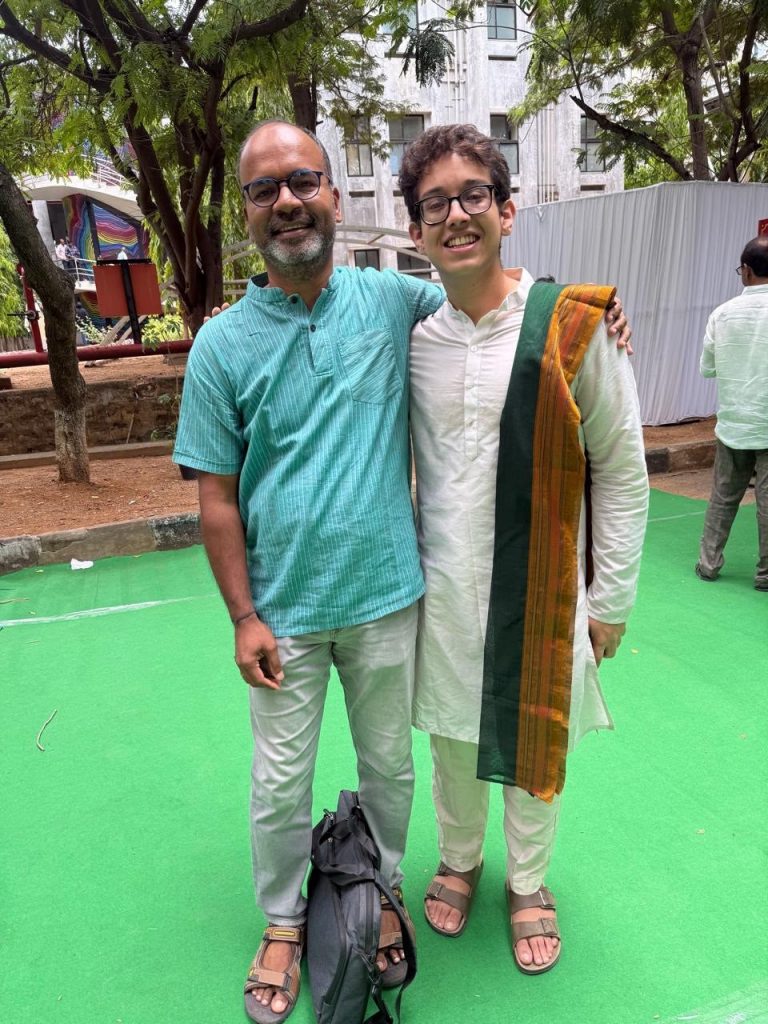
On the very first day of college, I see a professor in his iconic shorts and cap, who is so cheerful and greeting every single person out there with a huge smile on his face. Little did I know then that this professor and his lab would become so integral to my trajectory.
The Lab Life
After having worked on the Precog task for hours, prepping for the interviews and being constantly worried about the results, I finally made it into the lab. The lab life was funnily enough, as tumultuous as the admissions were. Perhaps a premonition of sorts? Immediately after joining, I got the opportunity to work on the Cognac project with a bunch of cool seniors like Akshit Sinha, Varshita Kolipaka, Shashwat Goel and Arvindh Arun, and learned a lot from it. I then started working with Microsoft Research on multimodality with Tanuja Ganu, and parallelly dabbled in interpretability with Shashwat Singh. I had a quick project on multilinguality with a few juniors and Shashwat Goel (this was my first and admittedly overwhelming experience leading a project completely). The last project with Precog was on collaborative spatial intelligence. with Ankur Sikarwar and Dr. Aishwarya Agrawal from MILA. Rather than talking about the projects itself, I’d like to delve into the lab experience around those projects.
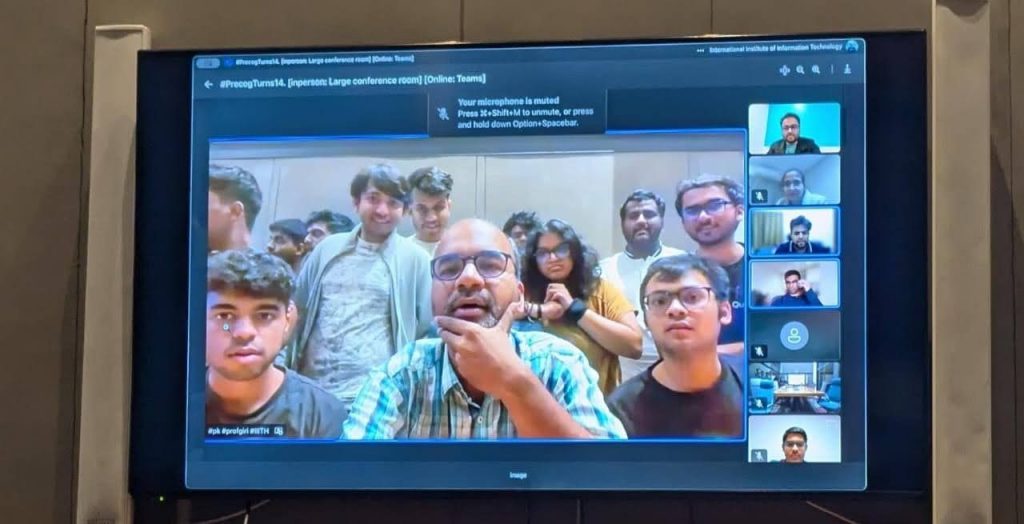
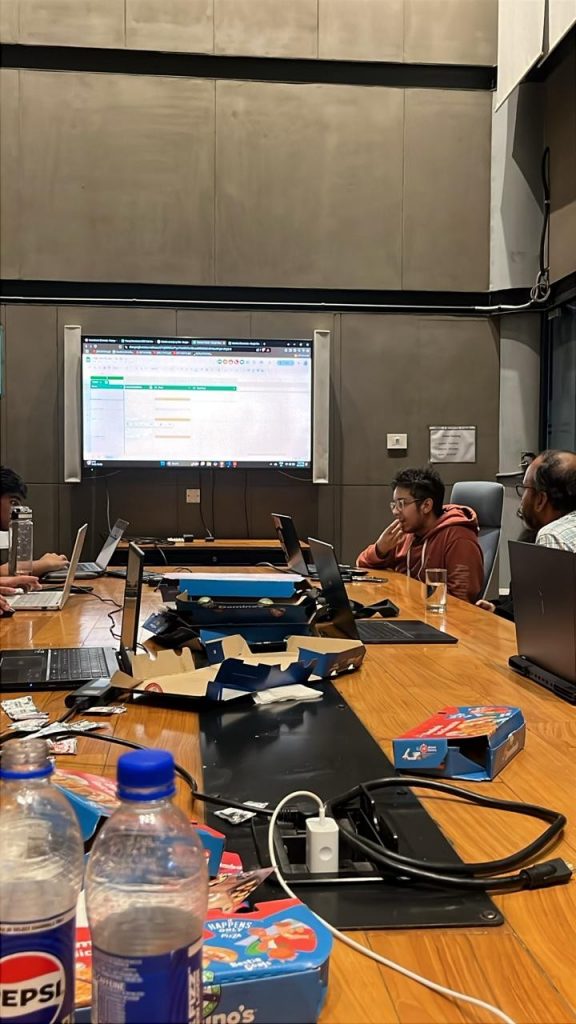
The environment here was very conducive, with every single WU being an exhausting but productive experience, having to defend your ideas and be the reviewer 2 for your lab mates. During submissions, shepherding always played such a great role helping improve the writing considerably. PK sir was able to create this environment where everyone is so eager to help out every other person. Any acceptance was the lab’s victory, and the rejections were also a shared loss. This constant network of intelligence around me gave me such confidence in being able to brainstorm any idea with my peers.
The lab environment was also very fun. Some moments that I cherish are constantly approaching Sreeram Vennam and Srija Mukhopadhyay for validating my ideas, Vaishnavi Shivkumar and Hemang Jain for banter, Sriharini Margapuri and Arihant Rastogi for so many fun discussions, and running around the lab collecting human evaluations for projects. Everyone is always willing to help, and we all collectively end up growing.
PK Sir’s Advice
Beyond the lab environment, sir’s advice often helped me grow so much in my world view. When I joined the lab, my main goal was to become a paper publishing machine of sorts, having set up lofty ideas like getting a paper out every semester. Well, I was new to this field, and little did I know how tough projects can become. Sir was able to notice this mindset almost immediately, and he constantly advised me to approach ML research differently. It is more often than not, working on something you are genuinely interested in despite all odds and making sure you see the project to completion. I am proud to say that with sir’s immense help, by the end of these two years, I was able to bring about that change in my viewpoint. You shouldn’t be working on projects just because they might be publishable. There always needs to be a genuine and deep curiosity, as research is usually a process of figuring out the unknown. Another memory that I will hold close to my heart — always place your health first. It was exam season, and I hadn’t slept a few nights in a row due to a project deadline. I unfortunately got a viral bug as well. Seeing my state, PK sir told me to take a break, since health always comes first. Deadlines will keep coming, and no deadline is worth sacrificing your sanity. I am so grateful to have received so much care and consideration from sir and the lab.
Parting Notes
I am about to begin a predoc at Google Deepmind now, where I will continue working on NLP. If I have to choose one thing that Precog has prepared me for my next steps, I’d say it has equipped me with the right mindset. I have learnt to take things one at a time, and that baby steps are okay. I’ve learnt that it is okay to stumble, but the most important thing is to keep working hard. Failing is okay, taking breaks is okay, but slacking off is not.